Protect your crypto: A fundamental security guide

The rise of cryptocurrencies offers many people in Latin America the opportunity to participate in a financial revolution. However, this opportunity also brings certain risks, especially in the realm of security. Scams and hacks are a constant threat in the world of cryptocurrencies. Therefore, it is essential for users to be informed and take proactive security measures to protect their assets. In this guide, we explore practical tips to avoid scams and hacks while protecting your cryptocurrencies.
Difference between cold and hot wallets
One of the most important decisions you must make as a cryptocurrency user is where to store your digital assets. There are two main types of wallets: hot wallets and cold wallets.
Hot wallets: These are wallets that are connected to the Internet. They include mobile applications, exchange platforms, and online wallets. They are convenient for making quick transactions and accessing your cryptocurrencies easily. However, due to their Internet connection, they are more vulnerable to attacks and hacks.
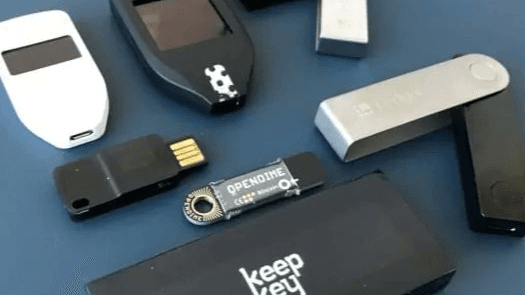
Cold wallets: On the other hand, cold wallets are not connected to the Internet, which makes them much more secure. These include hardware wallets, which store your assets on a physical device, and paper wallets, where private keys are printed on a physical medium. Although they are less convenient for frequent transactions, they offer a superior level of security.
Importance of private keys and seed phrases
Private keys and seed phrases are fundamental for you to access and control your cryptocurrencies. It is essential that you understand their importance and how you can protect them.
Private keys: A private key is like the password to your cryptocurrencies. Anyone who possesses it can access and spend your funds, so you should never share it. Always ensure you store it in a safe place, and opt for custody methods that do not require sharing your private keys with third parties. Remember the famous saying: "Not your keys, not your coins."
Seed phrases: A seed phrase is a series of words that allow you to recover your wallet. It acts as a backup in case you lose access to your devices or private keys. It is fundamental that you keep this phrase in a safe place. Avoid storing it digitally; instead, write it down and keep it in a secure location, such as a safe.
Two-factor authentication (2FA)
The two-factor authentication (2FA) is an additional layer of security that protects your accounts on exchanges and digital wallets. In addition to your password, you will need a second verification method, such as a code sent to your phone or generated by an authentication app, which makes it more difficult for attackers to access your accounts.
Implementing 2FA: Always enable 2FA on all platforms that allow it. Use dedicated applications like Google Authenticator or Authy, instead of receiving codes via text messages, which can be intercepted.
Phishing and common social media scams
Phishing attacks are deceptions designed to steal your confidential data. They usually occur when hackers impersonate trusted entities, sending emails or messages to obtain your login credentials.
Identifying phishing: Never click on suspicious links or provide personal information to sites or messages that are not trusted. Always verify the URL of the website and ensure it is legitimate, especially if you are redirected from an email or message. If you are on a cryptocurrency exchange page, you can look for the official verification channel, where you will be able to check all the official URLs that belong to that exchange. This is the official WEEX verification channel.
Social media scams: Social media is often a fertile ground for crypto scams. Scammers may send messages claiming they found a new "irresistible" investment opportunity or impersonate influencers or cryptocurrency platforms. Always try to be skeptical of offers that seem too good to be true and perform independent checks before committing your funds. DYOR: Do your own research, always.
My real-life case
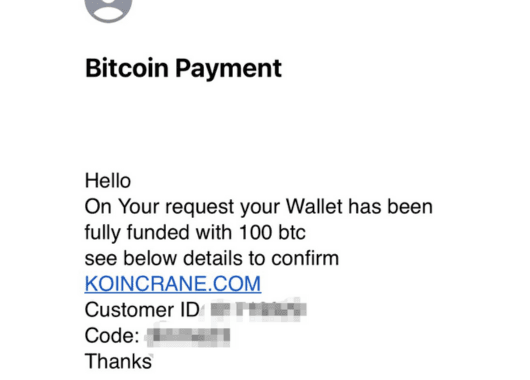
A few months ago, I was checking my inbox when I suddenly found this email from a sender of Asian origin. Strange. That was the first red flag. My phone has a feature that allows me to preview some emails without opening them, and that is how I took this screenshot, knowing I would use it for this article. The subject line says, translated: Bitcoin payment, second alert (who is going to send you a payment you didn't ask for or expect in Bitcoin?). After the greeting, it states that at my request (non-existent) my wallet was funded with 100 BTC. OK, third red flag with flashing lights: I didn't send my wallet address to anyone, and without this data, no one can send me any crypto. And let's be realistic, when the amount is that large, that in itself should make you suspicious: 100 BTC today is equivalent to 11 million dollars, with the price of BTC hovering around 110,000 US dollars in mid-2025.
If all that didn't catch your attention, you probably fell for it, because what it says next is to consult below to confirm, and I can bet my life without risk of losing it that when you click on that link in capital letters, that is when you enter a phishing page or have some malicious software installed to steal every last cent from you. Logically, after taking that screenshot, I deleted the email and avoided the headache, but a few years ago, before entering the crypto world, some hackers did manage to phish me and steal money from an online account. What do I mean by this? No one is exempt; we can only reinforce our security to the maximum and try to be as attentive as possible.
Conclusion
Stay up to date with the best security practices in the crypto world. Always read trusted sources, try to keep up with cryptocurrency news, and participate in communities where security discussions are common. Consider diversifying your storage by using a mix of cold and hot wallets to balance security and accessibility. This includes storing your private keys and seed phrases in different places.
Make sure to keep your applications and devices updated. Updates often include essential security patches that fix vulnerabilities that can be exploited by hackers. Implementing these security measures will not only protect your current investments but will also foster a safer and more reliable participation in the world of cryptocurrencies. Thus, you will be able to enjoy the benefits of the crypto ecosystem with greater peace of mind and confidence, providing stability and growth to your long-term investments. With this guide, you will be better prepared to navigate the crypto space safely and effectively, avoiding scams and hacks that could compromise your finances.
Security must be a constant priority for all cryptocurrency users, especially in a region like Latin America, where the use of these currencies continues to increase. The decentralization and financial autonomy offered by cryptocurrencies come with the personal responsibility of protecting your assets. Register on WEEX, the exchange with 2FA, which prioritizes the security of users and their assets at all times.
Disclaimer
WEEX and its affiliates provide digital asset exchange services, including derivatives trading and margin trading, only where it is legal to do so and for eligible users. All content is general information and does not constitute financial advice. You should seek financial advice before trading. Cryptocurrency trading is a high-risk activity and can result in the total loss of your assets. By using WEEX services, you accept all related risks and terms. Never invest more than you can afford to lose. Consult our Terms of Use and our Risk Disclosure for full details.