Ethereum and Solana via ETF: is it worth investing in 2026?

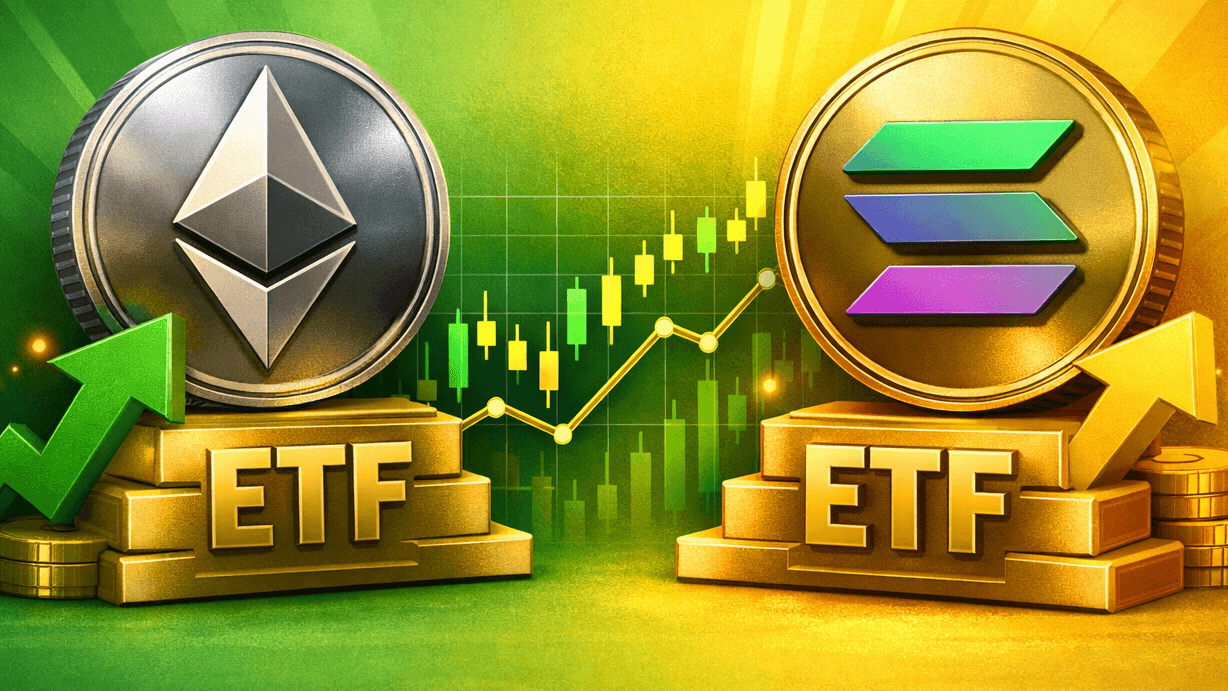
An ETF (Exchange Traded Fund) is a fund traded on a stock exchange that replicates the performance of an asset. In the crypto universe, it allows you to invest in Ethereum or Solana without needing to create digital wallets, manage private keys, or operate on foreign exchanges.
The purchase is made like a common stock on the B3, with professional custody and CVM regulation. For the Brazilian investor, this means fewer technical barriers and more legal protection—two factors that have attracted both individual investors and large institutions to this market.
ETF or direct investment: which to choose?
Investing in a crypto ETF or directly depends on your profile and objective. Those seeking simplicity and regulatory security tend to prefer the ETF, but those who want to explore the full potential of the crypto market, with futures, leverage of up to 200x, staking, and copy trading, find in WEEX the ideal environment to operate directly.
| Criterion | Direct Investment (WEEX) | Crypto ETF |
|---|---|---|
| Custody | Self-custody | Fund manager |
| Complexity | High | Low |
| Advanced features | Futures, staking, copy trading | Limited to the product |
| Exposure | Direct to the asset | Indirect via shares |
| Access | Any amount | Starting from ~R$30 |
Both approaches have a place in the same portfolio: many investors use ETFs for long-term exposure and operate directly on WEEX to take advantage of short-term movements with more agility.
Ethereum ETFs available in Brazil
After the approval of spot Ethereum ETFs in the US by the SEC, Brazil followed quickly with products listed on the B3. Today, the Brazilian investor has access to ETHE11, QETH11, HASH11, DEFI11, and the ETHA39 from BlackRock, one of the most relevant in the global market, with over US$ 1 billion in inflows in the US.
In terms of cost, the ETHA39 charges 0.25% per year with a discount to 0.12% in the first year, making it competitive against other variable income funds. The other products vary in composition and fees, which requires attention when comparing.
All these ETFs replicate the price of Ether, are traded in real-time on the B3, and have growing liquidity with the entry of institutional managers. At WEEX, these institutional movements are reflected directly in the ETH price dynamics, which allows the investor to cross-reference data between the ETF and direct operation on the platform to make more informed decisions.
Solana ETFs in Brazil: the staking differential
Brazil was a pioneer in the Americas in approving the first spot Solana ETF, followed quickly by a second product, both listed on the B3. The move reinforces the growing institutional interest in SOL and places the country at the global forefront of this segment.
The great differentiator of Solana ETFs compared to Ethereum ones is the possibility of integrated staking. At WEEX, those who already operate SOL directly know this mechanic well; via Staking ETF, the same principle applies in a simplified way: the fund validates transactions on the blockchain and passes part of the yields to shareholders, without the investor needing to configure anything.
In practice, the difference between the two models is direct:
- Spot ETF: replicates only the price of Solana, without generating additional income.
- Staking ETF: generates passive income automatically, distributed to shareholders by the fund.
The expectation is that new products with staking will be launched throughout 2026, with international managers expanding the portfolio available in the Brazilian market.
Advantages and risks of Ethereum and Solana ETFs
Ethereum and Solana ETFs offer concrete advantages for the Brazilian investor. Regulation by the CVM ensures transparency and legal protection. Professional custody eliminates the risk of losing private keys, which is a real problem in direct investment. Accessibility starting from about R$30 per share democratizes access to assets that, if bought directly, would require larger amounts.
On the other hand, risks do not disappear with the ETF structure. The volatility of the crypto market remains: Ethereum and Solana can fluctuate 20%, 30%, or more in a matter of weeks. Gains are taxed as variable income, which requires proper control and declaration in the income tax return. Management fees, even if low, impact long-term returns. And regulatory risk exists: changes in CVM or Central Bank rules may affect these products.
For those who want to monitor these risks closely and react with agility, WEEX acts as a strategic complement to the ETF—with real-time market data, tools for hedging positions, and direct access to assets when the moment requires a faster response.
How to invest in Ethereum and Solana ETFs
- Open an account on an authorized platform—WEEX, for example, offers access to both ETFs and direct crypto investment, without needing to use multiple platforms.
- Analyze the available ETFs—compare management fees, daily liquidity, and composition.
- Choose according to your profile—spot ETF for direct price exposure, staking ETF for passive income in Solana.
- Buy shares through the home broker—just type the ETF code (e.g., ETHA39, SOLH11) and set the quantity.
- Diversify and monitor—combine ETFs with direct positions when it makes sense for your strategy.
If you want to go beyond ETFs, WEEX gives you immediate access to Ethereum, Solana, and more than 600 crypto assets in the same account, with futures, native staking, and copy trading for when you are ready to explore the market in more depth.
Are Ethereum and Solana ETFs worth it in 2026?
The Brazilian crypto ETF market has matured rapidly. With products from major managers like BlackRock, Hashdex, and BTG Pactual already available on the B3, and new launches planned for 2026, the investor today has options that simply did not exist in 2023, and WEEX has followed this growth by expanding access to these products on the platform.
For those seeking exposure to the crypto market with regulatory security and without technical complexity, Ethereum and Solana ETFs are a solid entry point. For those who already have experience and want more control over their positions, direct investment through WEEX offers more tools and agility.
The caveat applies to both paths: volatility is a constant in the crypto market. Size your exposure according to your risk profile, diversify your portfolio, and make decisions based on data—not on market euphoria or panic.
Frequently Asked Questions
What is a cryptocurrency ETF?
A fund traded on a stock exchange that replicates the performance of a cryptocurrency, with CVM regulation and professional custody.
Which Ethereum and Solana ETFs are on the B3?
ETHE11, ETHA39 (BlackRock), HASH11, QETH11, and the Solana ETFs approved in 2024/2025, including products with staking.
How does staking work in Solana ETFs?
The fund performs staking on the blockchain and passes the yields to shareholders—without the investor needing to configure anything.
How to declare crypto ETFs in the income tax return?
Same as stocks: report acquisition and sale value, calculate gains, and pay tax on variable income.
What is the difference between an ETF and investing directly on WEEX?
The ETF offers simplicity and regulation. WEEX offers direct access to the asset with more operational features like futures, staking, and copy trading.
Disclaimer
WEEX and its affiliates provide digital asset exchange services, including derivatives and margin trading, only where legal and to qualified users. All content is general information and not financial advice—seek independent advice before trading. Cryptocurrency trading is high-risk and can result in total loss. By using WEEX services, you accept all related risks and terms. Never invest more than you can afford to lose. Consult our Terms of Use and Risk Warning for details.