Centralized and Decentralized Exchanges: Is One Better?

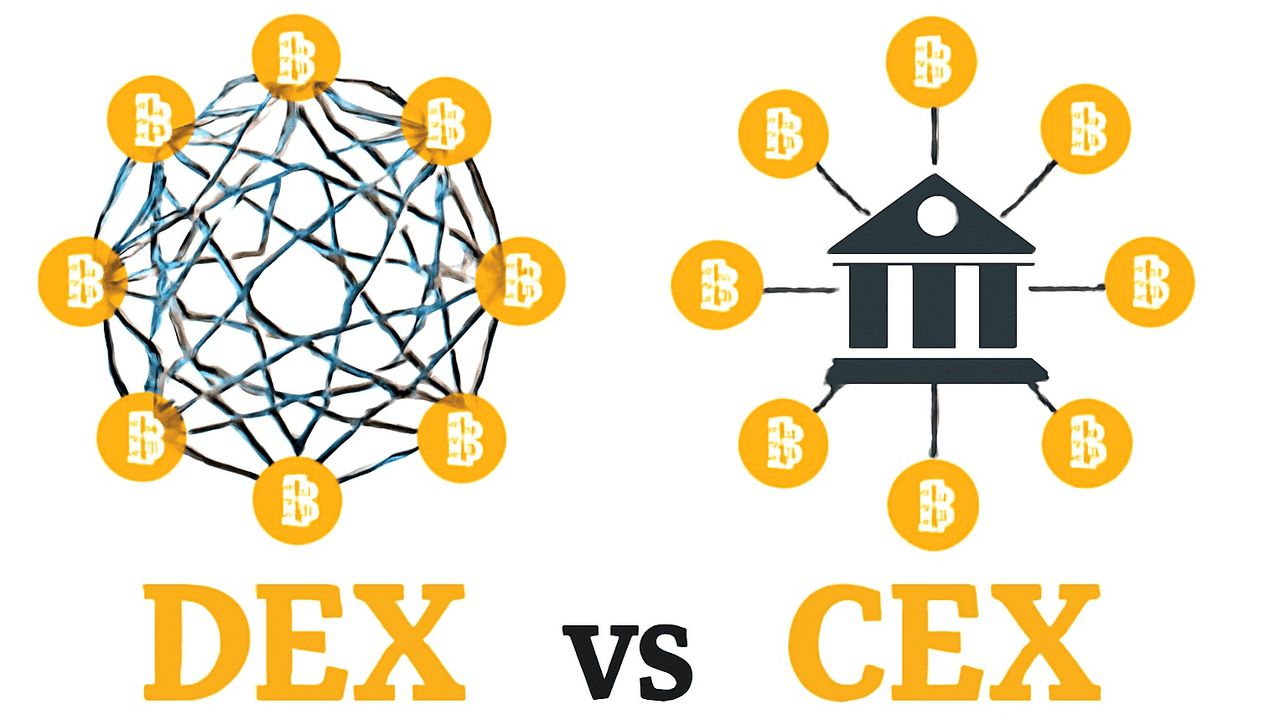
In the world of cryptocurrencies, exchanges or trading platforms play a fundamental role, allowing users to trade (buy or sell) digital assets. There are two main types of exchanges: centralized exchanges (CEX) and decentralized exchanges (DEX). CEXs operate like traditional intermediaries, similar to a bank or a stock exchange, where a central entity manages transactions, funds, and security. On the other hand, DEXs function on the blockchain in a peer-to-peer manner, without a central controller, allowing users to maintain full control of their assets. This distinction creates a constant debate: is one superior to the other? In this article, we will explore their advantages, disadvantages, and key examples, as well as recent trends in user preferences.
What are centralized exchanges (CEX)?
Centralized exchanges are platforms managed by companies or entities that act as custodians of user funds. On a CEX, traders deposit their cryptocurrencies or fiat currencies (such as dollars or euros) into accounts controlled by the platform, which in turn facilitates transactions. This simplifies the process, as the exchange handles liquidity, order matching, and trade execution.
Among the advantages of CEXs are their high liquidity, which allows for fast transactions with low spreads (i.e., little difference between buy and sell prices). Additionally, they offer user-friendly interfaces for beginners, 24/7 customer support, and advanced tools such as margin trading, futures, and options. According to Moonpay, CEXs facilitate fiat-to-crypto conversions in a simple way, which attracts new users to the ecosystem. Another benefit is the integration with traditional banking systems, which allows for direct deposits in fiat currencies, something not always possible on DEXs.
However, CEXs are not without disadvantages. Centralization means that users must trust the platform for the custody of their funds, which exposes them to risks such as hacks, bankruptcy, or government regulations. Some historical examples include the collapse of the FTX exchange in 2022, which highlighted the vulnerability of these systems. Furthermore, they usually require identity verification (KYC), which compromises privacy, and they may charge higher fees for certain operations.
Some examples of prominent CEXs include Binance, the largest exchange by trading volume, which offers hundreds of cryptocurrency pairs and tools like staking and lending; Coinbase, which focuses on U.S. users with an emphasis on regulatory compliance; and WEEX, an emerging platform gaining traction in 2025. WEEX is a CEX specializing in futures and spot trading, supporting over 1,000 cryptocurrencies, with leverage of up to 400x and an intuitive mobile app. According to reviews by CryptoNinjas, WEEX stands out for its low fees (around 0.02% on futures trades), high liquidity, and security measures such as cold storage and periodic audits. It operates in more than 130 countries, serving millions of users, and offers copy trading for beginners, making it accessible without sacrificing advanced features. Compared to giants like Binance, WEEX positions itself as an option more focused on the retail market, with tight spreads and no intrusive ads in its interface. For information on which centralized exchange might be right for you, check out the articles "What is the best crypto exchange for beginners?" and "How to choose the right exchange in your country?".
What are decentralized exchanges (DEX)?
Unlike CEXs, DEXs operate without central intermediaries by using smart contracts on blockchains such as Ethereum or Binance Smart Chain. Users connect their wallets (such as MetaMask) directly and perform peer-to-peer trades, always maintaining control of their private keys and funds. This aligns with the original spirit of cryptocurrencies: decentralization and autonomy.
The advantages of DEXs are notable in terms of both privacy and security. They do not require KYC, which protects user identity, and they avoid single points of failure since there is no entity that can be hacked or censored. Komodo Platform highlights that DEXs offer censorship resistance and greater control over assets. Additionally, they usually have lower fees, as they do not involve intermediaries and allow for the trading of emerging tokens that are not listed on CEXs. WunderTrading emphasizes their focus on privacy and user control.
However, DEXs present challenges. Liquidity is generally lower, which can lead to greater price slippage on larger trades. Interfaces are less intuitive for beginners, and transactions depend on blockchain speed, which can cause delays and high gas costs on congested networks like Ethereum. Furthermore, they do not easily support fiat-to-crypto conversions, forcing users to use bridges or external on-ramps. Another risk is exposure to faulty smart contracts, which could be exploited by hackers.
Key examples of DEXs include Uniswap, the pioneer on Ethereum that uses an automated market maker (AMM) model to provide liquidity through pools; PancakeSwap, on Binance Smart Chain, known for its low cost and yield farming; and SushiSwap, which offers similar functionalities with additional incentives, such as staking. These DEXs have already processed billions in trading volume, demonstrating their viability, but they remain dependent on the adoption of the underlying blockchains.
Comparison: Is one better than the other?
Determining whether a CEX is better than a DEX depends on the user's profile and priorities. There is no absolute winner; both coexist and complement each other in the crypto ecosystem. For institutional traders or beginners, CEXs like Binance or WEEX are ideal for their speed, liquidity, and support. DailyCoin notes that CEXs benefit from larger user bases and established reputations. In contrast, according to Cointelegraph, for users who value privacy and decentralization (such as long-term holders or advocates of financial sovereignty), DEXs like Uniswap offer greater autonomy, albeit with trade-offs regarding usability.
In terms of security, DEXs avoid the risks of centralized custody, but CEXs have improved with insurance and protection funds, such as Binance's SAFU. Economically, CEXs usually have higher volumes: in 2025, they account for 87.4% of market share according to Coherent Market Insights. However, DEXs are growing in niches like DeFi, where the total value locked (TVL) has already exceeded $100 billion on some platforms.
Recent trends: Where are users leaning in 2025?
In 2025, user preferences show a mixed landscape, with a dominance of CEXs but notable growth in DEXs. Chainalysis reports in its Global Adoption Index that global cryptocurrency adoption has increased, led by countries like India and the U.S., where CEXs facilitate mass entry thanks to their ease of use and clear regulations. Forbes indicates that traditional institutions are integrating crypto trading desks into CEXs, boosting their dominance. Platforms like WEEX have seen a surge in retail users due to their focus on futures and low fees, attracting active traders in volatile markets.
However, there is a shift toward DEXs driven by privacy and self-custody concerns. Coin.space highlights a movement toward decentralized wallets, which reduces reliance on CEXs. Rocknblock mentions trends such as AI-driven trading and cross-chain liquidity on DEXs, making them more attractive to advanced users. Regulations in 2025, such as the EU's MiCA law, favor CEXs due to compliance but drive DEXs in regions with government restrictions. In general, novice users lean toward CEXs (70-80% of traders), while experienced ones prefer DEXs for DeFi, with a 20-30% annual growth in DEX volume according to ResearchGate.
Kraken predicts that trends like memecoins and regulatory clarity will boost both, but with DEXs winning in innovation. NorthCrypto emphasizes that growth will continue, with an emphasis on security and usability.
Beyond the concerns each user may have, what everyone is undoubtedly looking for is real-time cryptocurrency news, so they can stay up to date on market sentiment and not miss changes in cryptocurrency prices to make profits, whether large or small.
Conclusion
Centralized and decentralized exchanges represent two complementary approaches in the crypto ecosystem. While CEXs like WEEX offer practicality and scalability, DEXs promote true decentralization. Neither is inherently better; the choice depends on factors such as risk tolerance, experience, and goals. In 2025, although CEXs dominate, the rise of DEXs suggests a hybrid future. We recommend diversifying and educating yourself, consulting sources like Chainalysis to make informed decisions. The crypto world evolves rapidly, and understanding these differences is key to navigating it successfully.
If you have already decided on a CEX, register on WEEX and start your crypto experience on a reliable exchange with deep liquidity. The future of money is already here!
Disclaimer
WEEX and its affiliates provide digital asset exchange services, including derivatives trading and margin trading, only where it is legal to do so and for eligible users. All content is general information and does not constitute financial advice. You should seek financial advice before trading. Cryptocurrency trading is a high-risk activity and can lead to the total loss of your assets. By using WEEX services, you accept all related risks and terms. Never invest more than you can afford to lose. Consult our Terms of Use and our Risk Disclosure for full details.