
Under Political Pressure, Is the Federal Reserve Still Independent?

Original Title: Kevin Warsh to say Fed independence not threatened by political pressure
Original Authors: Claire Jones and Myles McCormick, Financial Times
Translation: Peggy, BlockBeats
Editor's Note: At the confirmation hearing of the Senate Banking Committee, Kevin Warsh elaborated for the first time on his understanding of the Federal Reserve's role and independence.
This hearing seemed to revolve around interest rates and inflation but fundamentally addressed a more core issue: in the context of escalating political pressure, how the boundary of central bank independence is defined and whether it can be maintained.
This discussion took place amidst a highly intertwined reality. On the one hand, President Trump has repeatedly pressured the Fed to cut interest rates, using strong language to criticize current Chair Jerome Powell; on the other hand, the U.S. Department of Justice's investigation into the $2.5 billion renovation project at the Fed's headquarters has been viewed by Powell as indirect pressure. At the congressional level, Republican Senator Thom Tillis directly linked this investigation to personnel appointments, stating explicitly that he would block nominations from going to a full Senate vote until the investigation is concluded. Monetary policy, regulatory investigations, and political appointments are overlapping and amplifying at this juncture.
The macro environment has not provided a buffer either. Post-pandemic inflation briefly surged to over 7%, still significantly above the 2% policy target; coupled with the Iran conflict raising energy prices, price pressures could continue to rise in the coming months. With inflation not yet effectively contained, the debate over "whether to cut interest rates" quickly shifted from a technical discussion to a political issue.
In this context, Warsh's statement presents a more realistic framework: on the one hand, he "cools down" public interventions from the president and Congress, believing that expressing views on interest rates itself does not constitute a substantive erosion of independence; on the other hand, he points the real risk to the Fed itself—if it fails to fulfill its core duty of controlling inflation, public trust will be weakened, and independence will also lose its foundation.
Thus, the meaning of "central bank independence" is undergoing a subtle shift: it is no longer just an abstract principle at the institutional design level but closer to a results-oriented credibility mechanism. Independence is not naturally present but is continuously tested and reshaped under the triple pressures of inflation, politics, and markets.
The following is the original text:
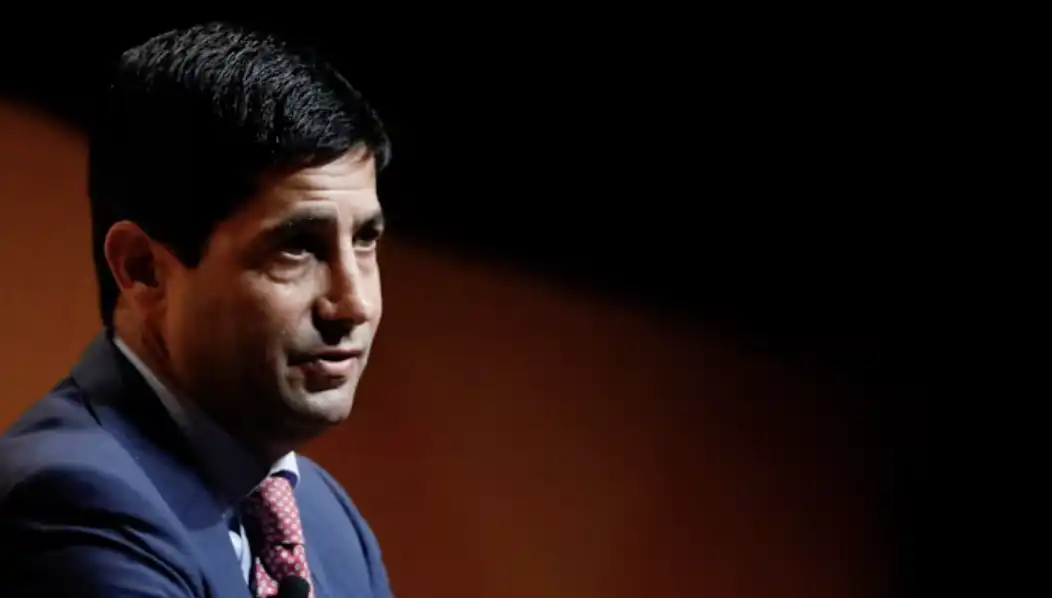
Kevin Warsh, the next nominee for Chair of the Federal Reserve nominated by U.S. President Trump
President Trump's nominee for Federal Reserve chair will tell Congress that the central bank's independence "has not been particularly threatened" when political figures call for a shift in borrowing costs, according to prepared remarks.
Kevin Warsh will say in his opening statement to the powerful Senate Banking Committee on Tuesday: "When elected officials—whether the President, a Senator, or a Representative—express their views on interest rates, I do not believe the operational independence of monetary policy is particularly threatened."
According to a prepared speech seen by the Financial Times, he will tell senators that "central bankers must be firm enough to hear diverse views from all quarters" while also being "humble enough to be open to new ideas and new economic developments."
This statement comes as President Trump has repeatedly called for rate cuts by the Fed. The U.S. President has previously referred to current Fed Chair Jerome Powell as a "bonehead" and "fool," accusing him of failing to follow orders.
Powell, in turn, has said that the current Department of Justice investigation into a $25 billion renovation project at the Fed's headquarters is a pretext to pressure the rate-setting body and force it to lower borrowing costs.
Republican Senator Thom Tillis from North Carolina is a member of the Banking Committee, which oversees the nomination of the Fed chair. He has stated that he will block Warsh's nomination from reaching a full Senate vote until the investigation into Powell is completed.
Warsh could potentially take over from Powell as early as May 16. He will make it clear that the Fed's independence in setting rates is "critical" and is key to controlling inflation.
However, the former Fed governor will also urge the Fed to "stick to its knitting," arguing that the central bank weakens its own independence when it "steps into fiscal and societal policy areas where it neither has authority nor expertise."
He will say, "The Fed shouldn't be a catch-all agency of the U.S. government, nor should it be the court of appeals for issues that rightly belong in other forums. This 56-year-old nominee will also elaborate on his qualifications for the role, telling lawmakers that he brings both "insider experience and outsider skepticism," mentioning his education background from Stanford University, his Wall Street experience, and his previous role as a Fed governor.
Warsh also points out that "independence" is at its highest in executing monetary policy but that this level of independence does not extend to the Fed's other functions authorized by Congress. He tells the committee, "In the management of public funds... or in bank regulation and prudential policy... and in matters relating to international finance, Fed officials should not enjoy the same special deference."
The Federal Reserve plays a key role in bank regulation, but it has collaborated with the U.S. Treasury and other regulatory agencies in crafting regulatory rules and overseeing financial system risks.
Powell also told senators that when the Fed fails to fulfill its duty to control inflation, it is actually undermining its own independence. He believes this will make the public "lose confidence in our economic governance system, questioning whether the so-called importance of monetary policy independence is indeed as crucial as people say."
Following the COVID-19 pandemic, inflation briefly rose to the highest level in decades, exceeding 7% in 2022. Currently, inflation remains above the Fed's 2% target, and with the impact of the Iran conflict driving up energy prices, price pressures are expected to increase further in the coming months.
Powell stated: "The mission Congress has given the Fed is to ensure price stability—no excuses, no fuzziness, no debates or evasions." He will also emphasize: "Inflation is a choice, and the Fed must take responsibility for it."
You may also like

B.AI partners with MiniMax to launch a limited-time free experience of M3, enabling zero-threshold implementation of Agentic productivity through full-stack infrastructure

The second half of the computing power battle: Intel CEO Pat Gelsinger reveals how AI is reshaping the global semiconductor supply chain

WEEX Live mode: Monitor 20 trading pairs at once and trade like a pro

Morning Report | Secret Network loses $4.67 million due to cross-chain vulnerability; Michael Saylor releases Bitcoin Tracker information again, may disclose increased holdings data next week

Kalshi's biggest competitor is not Polymarket
WEEX Makes Affiliate Access Easier on the Web and in the App
Customize Your Spot Trading Page: Drag Modules and Move the Order Panel Where You Want It

Perp DEX: The Next Generation Exchange "War"

10 Counterintuitive Insights on Latin American Payments

The AI gamble of mining companies: Valuations enter a phase of differentiation, and it's hard to turn the tide

A letter from Alliance to entrepreneurs: Written on the occasion of Cursor selling for 60 billion dollars
Stablecoins Finally Find Real Returns: On-Chain Reinsurance Re Explained | Interview with Re Founder Karan Saroya

The impossible triangle is simply a pseudo problem

Will MicroStrategy fall into a death spiral? What will the macro trend be in the second half of the year?

Blockchain Capital Partner: The Core Secret of Arbitrage
STRC unanchored by 11%, can the perpetual motion machine of Strategy still operate?

Bitcoin Market Analysis 2026: Can BTC Reach $150K by Year-End?
Bitcoin ETF Outflows Hit a Record $4.4 Billion: What Are Traders Doing With Their Cash?
B.AI partners with MiniMax to launch a limited-time free experience of M3, enabling zero-threshold implementation of Agentic productivity through full-stack infrastructure
The second half of the computing power battle: Intel CEO Pat Gelsinger reveals how AI is reshaping the global semiconductor supply chain
WEEX Live mode: Monitor 20 trading pairs at once and trade like a pro
Morning Report | Secret Network loses $4.67 million due to cross-chain vulnerability; Michael Saylor releases Bitcoin Tracker information again, may disclose increased holdings data next week
Kalshi's biggest competitor is not Polymarket
WEEX Makes Affiliate Access Easier on the Web and in the App

Popular coins
Latest Crypto News


