
Forbes 2026 Interest Rate Forecast, Who Determines the Fed's Path?


Original Article Title: What To Expect For Interest Rates In 2026
Original Article Author: Simon Moore, Forbes
Translation: Peggy, BlockBeats
Editor's Note: With the market betting that 2026 will see a "new Fed chair + a new round of rate cuts" scenario, the U.S. interest rate path has once again become the key variable for global asset pricing.
CME futures indicate that the federal funds rate may fall to around 3% in 2026, below the current 3.75%–4% range, with the major cuts likely concentrated in the first half of the year. However, against a backdrop where inflation has not fully returned to target and signs of weakening employment have emerged, the policy outlook remains uncertain. Although the Trump administration is expected to appoint a more dovish new chair, the FOMC's operational mechanism means that the policy stance will still be driven by economic data.
This article outlines the key interest rate meeting schedule, rate cut expectations, and policy dynamics for 2026, providing readers with a clear framework for understanding the direction of U.S. interest rates.
The following is the original text:
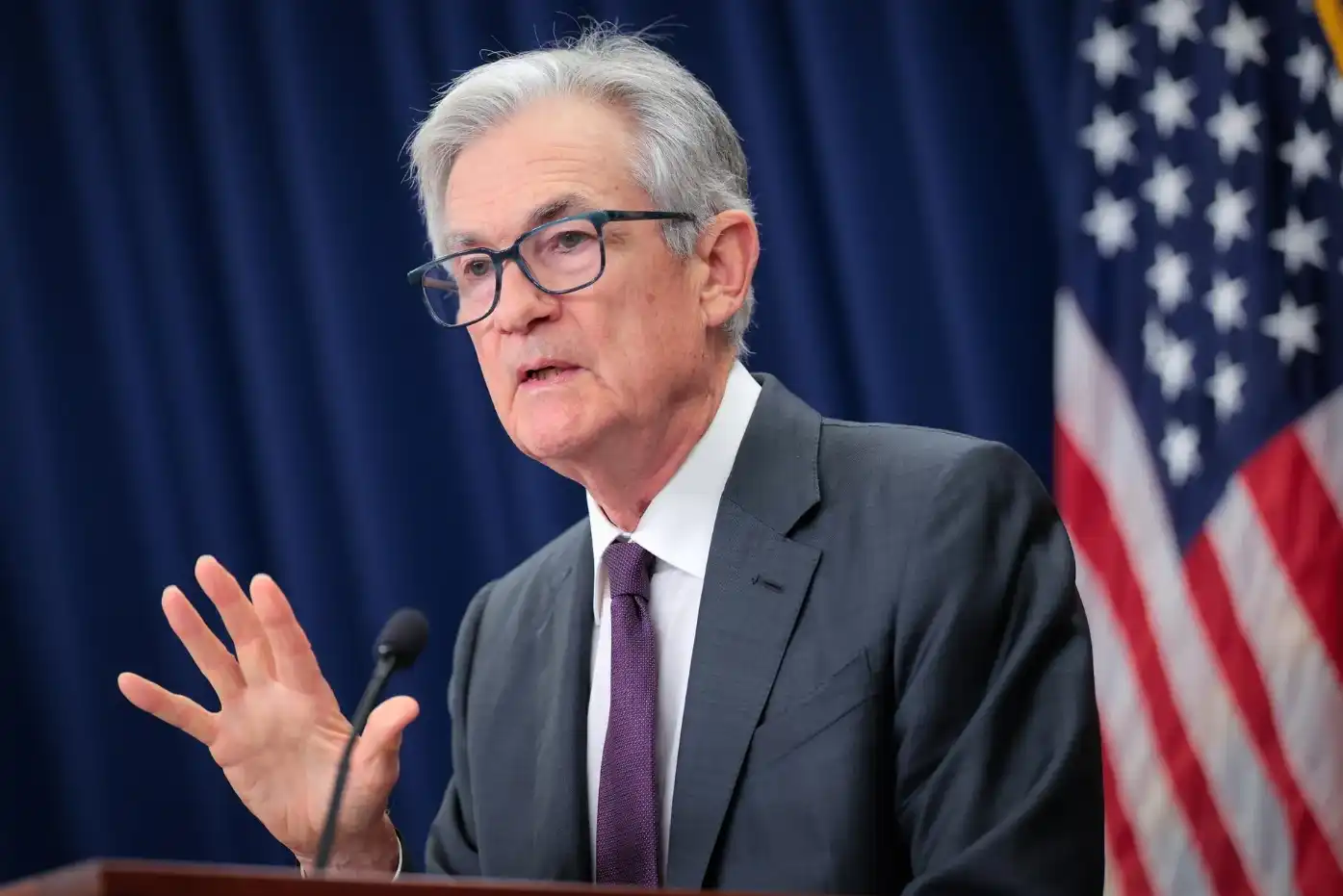
After the routine Federal Open Market Committee (FOMC) meeting in Washington, Fed Chair Jerome Powell answered questions at a press conference. Despite President Donald Trump's pressure for a rate cut, the U.S. central bank kept the federal funds rate unchanged in the 4.25%–4.5% range.
Based on pricing of rate futures by the CMEFedWatch tool, the market broadly expects that in 2026, under the backdrop of a "new Fed chair," there will be a short-term rate cut cycle, with the FOMC's eight meetings throughout the year likely focusing on the rate cut path.
Before that, the FOMC will still hold its final interest rate meeting of the year on December 10, 2025. The market believes that there is a possibility of a small rate cut at this meeting, but the probability of maintaining the rate is also not negligible.
2026 Interest Rate Path
Based on current pricing, by December 2026, the federal funds rate is expected to decrease to around 3%, below the current range of 3.75%–4%.
However, the interest rate outlook still carries significant uncertainty: in more extreme market estimates, rates could drop as low as 2% or continue to hold at the 4% level.
If the FOMC ultimately initiates a rate cut, the market believes the key rate cut may be concentrated in the first half of 2026. In contrast, Fed officials themselves are more cautious about their 2026 rate level forecasts, with most forecasts still expecting rates to remain above 3%. However, these forecasts were released in September and will be updated again in December.
2026 FOMC Meeting Schedule
Although the Fed can adjust rates at any time in an economic emergency, in normal years, it typically follows the established schedule of eight meetings.
The 2026 rate-setting meetings will be held on the following dates: January 28, March 18, April 28, June 17, July 29, September 16, October 28, and December 9.
Starting in March, the FOMC will update its Summary of Economic Projections (SEP) at alternate meetings.
New Chairmanship Could Drive Lower Rates
President Trump is expected to nominate a new Fed chair in 2026 who is more supportive of a "cutting" orientation. Prediction markets (such as Kalshi) currently view Kevin Hassett as the most likely candidate.
This suggests that the 2026 rate policy may be further influenced. For example, Stephen Miran, appointed by Trump in 2025, has consistently leaned towards a more aggressive rate-cutting stance in votes.
However, apart from the chairman's selection, the overall voting structure of the FOMC will continue in the existing pattern, meaning that monetary policy will not undergo a drastic shift due to a new chairman.
Economic Data Remains a Key Variable
Ultimately, the Fed's decisions will still be driven by economic data.
Currently, inflation is slightly above the 2% target but shows no signs of spiraling out of control; the unemployment rate has ticked up, but not to an alarming level.
In this environment, the FOMC is likely to gradually reduce rates. If the unemployment rate deteriorates significantly, the rate cut may be forced to increase; conversely, if inflation unexpectedly rebounds, the Fed may slow the pace of adjustments. However, the latter scenario currently has a low probability of occurring.
The most closely watched indicator at present is employment data. Some officials believe the labor market is slowing, which could drag down the overall economy, necessitating an early rate cut; while others believe that softening employment does not pose a real risk.
The employment data will continue to reveal in 2026 which side's judgment was closer to reality.
You may also like

Morning News | The draft amendment to the People's Bank of China Law aims to clarify the legal status of digital renminbi; South Korea will transfer about 40 unregistered virtual asset service providers to law enforcement agencies

The cryptocurrency industry has entered the "Show Me" era: merely relying on vision is no longer enough

Interpreting the Ethereum Foundation's new structure: Reaffirming self-sovereignty amid institutional trends

Former SpaceX engineer reconstructs the financial execution system using first principles

Tidal Investment: We still have a positive outlook on the AI industry chain, but the reasons have changed

Standard Chartered Bank sings a 50x rhapsody again, aiming for AAVE to reach 3500 USD

The interim executive director of the Ethereum Foundation speaks out: What is our mission?
Why does OKX want to start a new company with the parent company of the New York Stock Exchange?

Why Is PAXG Price Different From Gold? 5 Reasons Crypto Traders Should Know

WEEX OpenAPI 101: 5 Powerful Modules, AI Trading Tools, and Grab Up to 70% Revenue Opportunities
Learn how WEEX OpenAPI connects traders, developers, AI agents, and trading platforms. Discover WEEX API features, Binance-compatible integration, automated trading workflows, revenue opportunities, and ecosystem possibilities.

Interview with NDV Founder Jason Huang: Popping the AI Bubble and the Myth of Microstrategy, Seeking the Ultimate Ace in the Crypto Market

Morning Report | Former Ethereum Foundation researcher establishes Ethlabs; EU Parliament Economic Committee passes digital euro regulatory proposal

Dragonfly partner Haseeb: The fastest-growing companies in the future may all be stuck at 149 people

How xBubble Breaks the Deadlock in VC's Heavy Investment in the OPC Economy

The encrypted unicorn Blockstream is deeply embroiled in a serious fraud case

Morning Report | The South Korean Financial Services Commission plans to expand the regulatory sandbox to include virtual assets; the parent company of the New York Stock Exchange, ICE, has reached a partnership with OKX to jointly establish a cryptocu...

Exclusive Interview with Strategy CEO: Putting Aside the Sale of 32 BTC, the 60 Trillion AI Intelligence is the Ultimate Fate of Bitcoin

TRON revitalizes the image of the bull, creating a more approachable brand character
Morning News | The draft amendment to the People's Bank of China Law aims to clarify the legal status of digital renminbi; South Korea will transfer about 40 unregistered virtual asset service providers to law enforcement agencies
The cryptocurrency industry has entered the "Show Me" era: merely relying on vision is no longer enough
Interpreting the Ethereum Foundation's new structure: Reaffirming self-sovereignty amid institutional trends
Former SpaceX engineer reconstructs the financial execution system using first principles
Tidal Investment: We still have a positive outlook on the AI industry chain, but the reasons have changed
Standard Chartered Bank sings a 50x rhapsody again, aiming for AAVE to reach 3500 USD


